Tuesday, December 25, 2007

More Poems


This poems were published in the journal 63 Channels, Fall & Winter 2007.

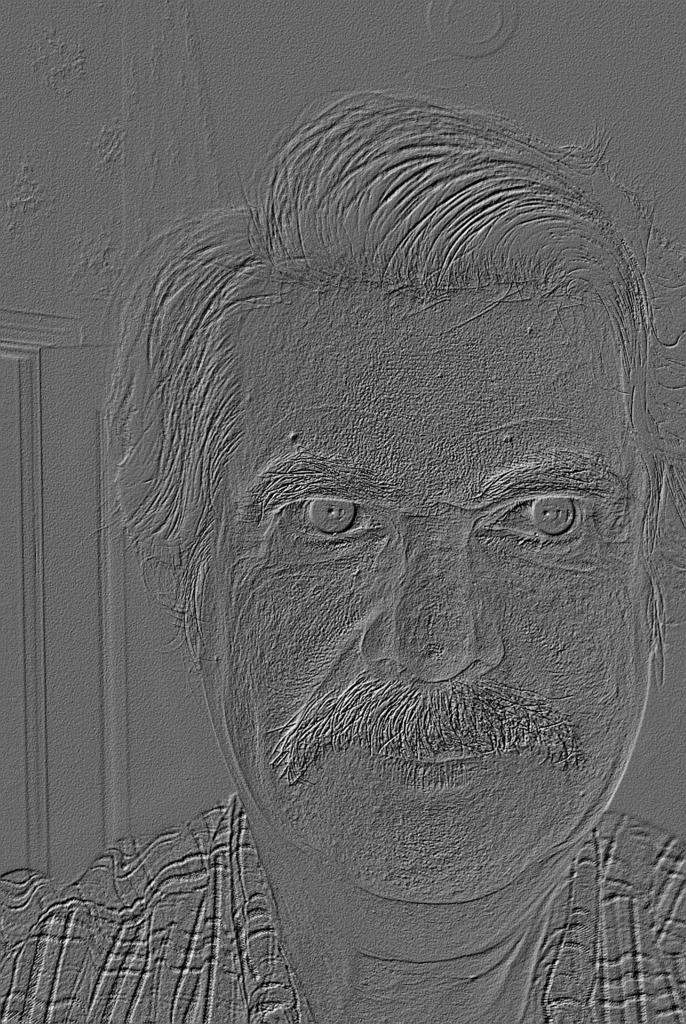
Self portrait by Carlos Ponce-Melendez

Squiggling lines try to define my confused face,
While my eyes, pathetically search for meaning

My Picasso mouth speaks the truth even when there is none
While my prominent nose destroys any hope of beauty

Dissident hair covers my forehead and my doubts
While my parabolic ears capture more banality that I can bear

My skin color is perfect and matches my intrusive eyes
While my whole look defies definition

No perfection here, just a human portrait,
While my soul shuns any encapsulation.


Vain by Carlos Ponce-Melendez

I didn’t know I was so vain
But a power mirror showed - on my own face -
An ugly blemish.

Where yesterday youth used to reign
A shabby skin is now plain - who wouldn’t complain?
Making my skin the source of my own disdain.


We are dead by Carlos Ponce-Melendez

A man is a composite of chemicals that breaths for a while,
And pisses everywhere wishing for eternity.

A man digests other organisms into litter
And feelings into ideas of unclear use.

A man creates music and weapons
Poems and poisons wishing for love
without realizing that he is essentially dead.

Wednesday, November 21, 2007

Another Poem

A window to my past (3rd Place, Voices Along the River. Antology 2007)

I wish I had a window where I could see the sun,
the moon, the sea and the forest.

In that window I would see you
I would say hello but you would not hear me
because you would be picking up flowers for me.

Exotic birds would make fragranced music
and blind butterflies would kiss you.
I would hear the music but also the silence of death.

I wish I had a window where I could see you
the way you were before your died,
always signing, always dancing.

I wish I had a window, any window;
it doesn’t matter if I couldn’t see the sky or the sea
as long as I could see you.

Recomendacion

Uno de los escritores mas interesantes que he leido en los utlimos dias es Roberto Bolano. Su estilo de contar historias es complejo pero sin mayores pretenciones. En el Gaucho Insufribel, Bolano hace un recuento del caracter argentino con una mezcla borgeana que le da un sabor muy particular a la historia.

Bolano tambien era poeta pero no he leido nunguno de sus trabajos en esa area. El nacio en Chile y vivio muchos anos en Mexico de donde partio para Espana. Ahi murio y ahi escribio la mayoria de sus obras literarias.

Mi mente en Blanco

Mi mente en blanco (published in Hispanic Cultural Review. Vol. XIII, 2007)

Mi mente se quedo sin ideas, nada de que escribir, nada se me ocurre. Bueno eso es un decir porque se me ocurre que nada se me ocurre. Me siento y me pongo a ver la pared, el techo, el suelo. Todo esta muy blanco menos el suelo. Yo no se para que le pagan al empleado de limpieza si nunca limpia nada. Y eso que el tipo tiene un bachillerato en sociología. Tal vez por eso es que no limpia bien. Ha de estar frustrado. Después de todo yo también tengo un bachillerato en sociología pero a mí siquiera me pagan mejor. Aunque yo creo que yo también califico como frustrado. ¿Y quien no? Con estos sueldos y estos horarios. Bueno a mí que me importa, volviendo al problema de la falta de temas para escribir... nada. Han pasado más de 30 minutos y sigo con una hoja en blanco y mi mente igual. ¿Y si escribiera un cuento sobre un niño que se porta mal y le va bien y otro que se porta bien y le va mal? No, eso ya esta muy trillado. Que curioso que no haya ni un solo cuadro en todo este cuarto. Las paredes blancas me molestan. Hace años Leticia quiso que pintáramos todas las paredes de nuestra casa de blanco. En ese entonces estaba de moda el blanco y se pensaba que así las casas se veían más grandes. Yo seguí viendo nuestra casa del mismo tamaño. De menos no le cupieron más cuadros de los que ya teníamos. Tal vez por eso Leticia se fastidio y se fue de la casa. Ella siempre andaba buscando nuevos proyectos y cuando logro lo de pintar toda la casa de blanco, se dio cuenta de que aun así la casa estaba muy chiquita y ella ya no cabía en ella. Había crecido espiritualmente. Esa fue su excusa para dejarme. No necesitaba excusas para hacerlo, yo no pensaba detenerla, después de todo yo me adelante al feminismo y siempre he dejado que las mujeres en mi vida hagan lo que quieran. Sus clases de Tai-Chi, baile tahitiano e introducción a la historia del arte prehispánica le abrieron perspectivas que no tenía cuando nos casamos. Ahora trabaja en un almacén como cajera pero dice estar realizada con clases de filosofía mahometana y de restauración de libros antiguos. A la mejor debería escribir un cuento sobre un hombre que compra un libro antiguo y encuentra un mapa. Entonces piensa que el mapa es sobre un tesoro y dedica toda su vida a buscar el tesoro. Al final descubre que se trataba de una treta del autor del libro para indicar que el mayor tesoro del mundo es que cada persona encuentre su propósito en la vida. Que ridiculo. Y el pinché suelo mugroso sigue molestándome. Cada vez encuentro más manchas. No es que yo sea un perfeccionista ni soy experto de limpieza pero yo le podría dar clases de trapear al sociologuito ese. Tal vez debería de quejarme. No porque el sociólogo-limpiador este subempleado le da derecho a hacer mal su trabajo. Claro que va a aducir que fue a Viet-nam y toda esa vaina. A mi me dijo que le toco ver como un asaltante mato a su mejor amigo a la salida de un cabaret de Saigón. ¿Y si escribiera una historia sobre la guerra? No, yo nunca he estado en la guerra y no se...bueno nunca he estado en muchas situaciones y he escrito sobre ellas. Tal vez si miro la puerta en lugar del piso o el techo se me ocurra algo. Voy a hacer un ejercicio y voy a describir la puerta literariamente... es de madera, posiblemente de caoba de algún país sudamericano que se esta quedando sin árboles para que nosotros tengamos puertas en nuestras oficinas. Aun cuando nunca se cierran esas puertas. El color café oscuro es como el del café con leche que le gustaba tomar a Amanda, la loquísima de Amanda. Quien sabe donde andará. Ya no quiso saber nada de mí cuando le dije que no me iba a divorciar de Leticia para casarme con ella. Según yo mi matrimonio era mas sólido que la puerta de caoba de mi cubícalo. En ese entonces yo no sabía que Lety estaba creciendo espiritualmente y que después ya no cabria en nuestra casa. Tal vez con una puerta de caoba la hubiera podido detener. Pero ¿para que? Así es mejor. Ya sin preocupaciones me puedo dedicar a escribir de lo que yo quiera. Pero ahora mi mente sigue en blanco, blanca, blanca como la paloma. Así dice la canción mexicana: “si a tu ventana llega una paloma, dile...” OH, no dice que sea blanca. No se porque se me ocurrió que fuera blanca. Ha de haber sido por las paredes blancas de esta oficina. Me debería de traer un cuadro para adornar tanta blancura. Lo malo es que mi esposa, mi ex-esposa se llevo casi todos los cuadros. Solo me dejo tres paisajes que son hojas de revistas de arte, de cuando ella tomaba una clase de introducción al arte. Quien sabe porque la introducción al arte no la hizo crecer espiritualmente. No como la clase de Tai-Chi. Podría escribir una historia sobre la influencia del Tai-Chi en el occidente, como esas filosofías están provocando una ola de divorcios de parejas bien establecidas... ¿pero de donde puedo sacar datos sobre el porcentaje de divorcios debidos al Tai-Chi? Los podría calcular... total, todo mundo hace lo mismo; el cincuenta por ciento de las mujeres están frustradas, la mayoría de la población quiere más tiempo antes que más dinero, ¿Será cierto? No termine mi descripción literaria de la puerta, pero no hay mucho mas que agregar. Cierto que tiene espesor ¿y si la mido? No definitivamente no soy un escritor de puertas. A Neruda le daba por escribir cosas del pan, a Borges le encantaba describir los enormes y filosos cuchillos con que se mataban los gauchos, Boyd Echenique hace grandes descripciones de borracheras, ¿habrá alguien que se haya enfocado por las puertas? Quien quite y esa es mi oportunidad de brincar a la fama literaria. Después de todo las puertas no solo sirven para impedir la entrada de intrusos también sirven para abrir la casa y que entre el sol, los amigos, el pan, los cuchillos filosos de Borges. No me motiva. Ya son las seis de la tarde, solo me quedan dos horas antes de que el maldito jefe de redacción venga a fregar que si ya tengo mi historia. Como si fuera tan fácil. Y en media hora llegara el sociólogo de la limpieza. Voy a aprovechar para decirle que limpie las manchas, siquiera la de jugo de uva que se ve tal mal y es la que más me molesta. Claro que me va a querer embarcar a escuchar sus historias de Viet-nam, o de cuando su mujer lo abandono para irse con un veterano de la guerra con Irak. Y eso que su mujer no tomaba clases de Tai-Chi. Tal vez para cuando llegue el sociólogo mal limpiador yo ya haya terminado mi historia y ya no tenga que sentirme presionado para que me deje escribir. ¿Cual historia? Resumiendo, puedo escribir sobre una pared blanca manchada de lo que parece es jugo de uva y resulta ser sangre. El empleado de limpieza la descubre y nota que el escritor, contra su costumbre, termino su trabajo y no esta. Por curiosidad, el empleado se agacha a ver lo que esta escrito en la computadora y lee: Nuestra gigantesca metrópoli que al atardecer comienza a llenarse de luces eléctricas y de gente que se retira a descansar fue testigo de otro brutal crimen sin sentido. Un sociólogo que trabajaba como periodista y odiaba el Tai-Chi, asesino cobardemente a otro sociólogo que trabajaba como empleado de limpieza cuando este leía…

Friday, September 14, 2007

The beauty of writing

Writing can be a taxing task but it may give hugh amount of happiness to the writier if the writing helps him to find new ideas, new feelings that were dormant in the mind of the writer and he didn't they were there.

Thursday, January 25, 2007

So many thing to write so little time


It's amazing how so many people want to be writers today. I guess they learn about famous authors and think that they can write as Flaubert, Balzac or Tolstoy. The sad part is that many of those people hardly read anything beyond magazines like People, Glamour or the Writers Digest. I know some people who say that they have read Vargas Llosa, Carlos Fuentes, Poe, Wild etc. But they don't have anything that shows they did or at least that they understood what they "read."
Well, it's not so bad since those individual are the bread of writers, philosophers and psychologists.

Saturday, October 14, 2006

Remember?

From Under the Sun, Vol, XI No. 1 Summer 2006

Remember?

One day you wake up and remember. You recall stories, incidents and curious pieces of data that pile up in your brain. Things that may very well have happened very differently because they took place fifteen, thirty years ago. Things that haven’t crossed your mind for so long and suddenly they seem like they happened today. You get surprised, why are you, all of a sudden, remembering that story? Why now? Is this a message from beyond? Is this a clue about your life, your death?
In the dawning of a cold Saturday, I woke up with the memory of my mother’s sad face. She looked as if she were going to cry. Here face resembles most icons of the Virgin Mary in Mexican churches. It is a face of someone suffering deep inside. It’s the face my mother had for years after my father died. It’s a face that my mother could pull out when she needed it. One of those occasions was the day when she finally agreed to buy me a bike. We went to a small store in downtown San Luis a colonial, very conservative city. The store belonged to a young widow, younger than my mother, who by then was also a widow. When I saw a big, shiny, black bicycle I fell in love with it and said to my mother "that one." Once Mrs. Manzanares told us the price, the real Mrs. Zapata took over. My mother’s sad face came alive, it was sad, but it glowed. I guess she was sad because she was going to spend money on a bicycle. But she was sort of happy because she was anticipating a hefty discount. She was like a lion watching a tender and juicy calf.
My mother was a woman of humble origins. Her father was a modest worker who was killed by lightning. A couple of years later her mother died leaving her two youngest daughters by themselves. My mother and her sister lived with Aunt Felicia, an older, married, sister for a while but it didn’t work. Aunt Felicia had marital problems and made the lives of the younger siblings hell, so they decided to live by themselves. There were other sisters but they also were married and struggling to survive themselves. My mother was seventeen and her sister fifteen. They rented a small room and got jobs. My mother worked as a clerk in a print shop. My father was one the sons of the owner.
The thirties were tough times in Mexico but they were also times of opportunities. Mexico was stabilizing after a revolution and a religious war. Businesses were growing and the government was creating all kinds of social programs. There were good opportunities for entrepreneurs and my father didn’t miss them. As a middle class businessman, my grandfather was counting on his children to work in his print shop. They would work for low pay but one day they would inherit the shop and have a good middle class life. That was good enough for two of my uncles and an aunt, but not for my father.
The print shop used a lot of paper. Some of that paper was thrown to the trash and my father and his brothers would make small notebooks to play with. One day, my father took some of them to school and sold them to other classmates. He told his brothers to do the same but they thought it was a hassle for just a few cents. But the entrepreneur mind of my father saw opportunities, and he began to sell his small notebooks in front of his father’s shop. He created different styles of notebooks and added pencils and other small items that were easy to move. In a few weeks the meager profits were not so meager. He realized that it was very easy for him to survive and prosper and do whatever he wanted to do without having to share control of his business with anybody else. So he didn't work too much in the shop, instead he increased his business selling pens, erasers and other merchandise. An office clerk who was in charge of buying pencils for his office offered my dad a trade; two boxes of pencils for a watch. My father agreed and he was very proud of his watch when someone offered him six pesos for the watch. He sold it for nine, a profit of six hundred percent over the cost of the pencil boxes. That was the beginning of an indisputable businessman.
He was a natural merchant and he could sell jewelry that a jeweler couldn't. With time he also sold paint and hardware and other materials that he found too cheap to let pass by. Maybe the initial success taught him to be bold. Or maybe it was in his genes but he was born a businessman. When he died, he was trading land, houses, apartments, cars, jewelry, paintings, ranches, farms, horses, chemicals, furniture and even fruit crops. He also was a partner in a hotel, a car shop, an entertainment park, everything but a print shop. When his dad died he didn’t claim his share of the family business. He didn’t want to take money away from his brothers and sister, he didn’t have to. He was wealthy.
My father married my mother when he was just beginning his entrepreneurial career. They had a modest start but thanks to my father’s hard work and financier intuition, he constantly improved the economic situation of his family. My mother wasn't prepared to handle her new condition. She was a penny saver and very soon she found herself surrounded by all kinds of luxuries. She didn’t have to bargain for fruit in the market but her training dictated that she had to save a few cents here and there. My father used to make fun of her and he wouldn’t accept the money that my mother was saving. She opted for helping her sisters instead.
Mrs. Manzanares was the opposite side of the coin. She had been a rich girl who married a not-so-rich guy for love. Her family refused to recognize her marriage and severed all links with her. Nevertheless, her husband was a hard working man and little by little was building his bike shop when he died from a badly treated infection. "As you know I'm a widow myself and I have to provide for six children, at least you don't have any," said my mother. But Mrs. Manzanares wasn't going to fall for such an argument. San Luis was a small city where everybody knew everybody. And everybody knew that even though my father had died, our family was one of the richest families in the region. So Mrs. Manzanares counterattacked, "I know but at least your husband had many businesses. Mario only had this bike shop and it doesn't produce much money, you know, the rent is high, paying the mechanic, taxes and giving bribes to inspectors even when I don't have any irregularities." Mario died from a simple foot infection. He just didn't want to spend money and time visiting a doctor. When he realized that he was going to spend more time fighting the infection than working he went to the hospital. It was several weeks too late.
During the money saving excursions with my mother I was extremely bored. I was not prepared to spend hours hearing my mother fighting for a few pesos here and there. I wasn't a spoiled rich kid; I was a confused kid. I didn't know if we were rich or poor. We lived in a big house with six bedrooms, four bathrooms, a library, two living rooms, a studio and an annexed maid quarters. The yard was big and my father built his office in a corner. There was a full time gardener and two full time live in maids. The house was very spacious and was full of beautiful furniture. The pantry was big and it was always full of beans, sugar, wines and all kind of goodies. My father liked bargains and he knew that good prices were available when buying by quantity. Therefore he bought sugar by 100 pounds bags, nuts by boxes, beans by bags and so forth. After my father died, my mother continued buying in the same style for several years. Of course that was more than enough to convince anybody in San Luis about wealth. But in my case, hearing my mother quibbling for a five cents discount on the lettuce with a poor merchant woman on the street was puzzling.
"But I have seven children to take care of, and look Nacho, he is only twelve years old. You know how expensive is to pay for college and he and his brothers eat a lot at their age." My mother wanted to score big. Mrs. Manzanares didn't have children and she couldn't claim that burden. However she could argue that my brothers and I were in the most expensive school in San Luis. And even though we were seven offspring my older sister had married and was living with her husband. And, if Mrs. Manzanares had known, she could have argued that I was twelve years old and not ten as my mother was claiming. But she wasn't very good at knowing a child's age. She was younger than my mother was and, according to my Aunt Anita, she was hoping for a second marriage. She was pretty, a little overweight but just the right amount to make her very attractive to older men. Her greatest asset though was that she was supposed to be easy prey. In those times a young widow made many men salivate. It would have been bad for an inexperienced woman but for an intelligent woman lascivious hunters were opportunities. She thought she could catch one of them, and it did happen several years latter.
My father died when I was ten years old but it took me about twenty years more to realize how much I needed him. Of course, at that time I cried and felt lost for a couple of months. But my family and family friends pampered me a lot. I was the youngest in my family so my mother, my sisters, brothers, aunts and uncles provided me with lots of distractions and support. That made me feel better because I didn’t have that before. They gave me the attention that my father couldn’t provide.
My father was a busy man he would leave home very early in the morning and return late. On top of that he wasn't the type of man who knew how to talk to children. He would tell my mother or other adults about his business but he didn't have conversations with his children. He never asked us for our opinions, feelings. That was the culture of most men in the fifties. Only when I was much older I tried to think of the things that my father did that proved his love for me. My mother always told us he was a great person and loved us a lot. First I just accepted that as a fact. But later I began to question how? Why he hardly talked with me? Why he didn't ask me how I felt at school like some of the fathers of my friends? Why he never offered to defend me from a nasty teacher who used to make fun of me? Why he never encouraged me to succeed at something?
Mrs. Manzanares said her last offer was twenty pesos less and no more. To avoid the issue of her childless condition and the cost of raising kids she explained the cost of her business. Juan, the mechanic was taking half of the profits and the rent of the shop was astronomical. And it was true that the rent was high. The shop was a half block off the main plaza. Few people had cars so they would walk to the stores around the plaza to buy clothes, furniture, shoes, and tools. The most popular coffee shops were one or two blocks from the plaza and coffee shops were a must for shoppers, bureaucrats, businessmen and university students. Therefore that place had a lot of people passing by. But Mrs. Manzanares didn't know how to capitalize on that traffic. She would sit and wait for customers. Not like my father who would go to the stores, government offices and offer them land for a new postal branch, jewelry to expand a beauty saloon, oranges for their restaurants and so forth.
He worked very hard and was always tired. That’s why I was surprised when, one day my father took me to the movies, only me! I don't know why just me. Years later my mother would tell the joke. She said that my father told me to wake him up if he fell asleep during the movie. Because he would fall sleep over and over, I spent all the time watching him instead of the movie. I vaguely remember that in the movie, a very poor man found a coin and had problems spending it. I guess it was a comedy. That small memory is one of the pieces of evidence that I collected in order to claim that my father loved me. He tried to show his love the only way he knew how, giving us things. On other occasion my grades in school weren't very good and he bought several toys and told me that those things were for me if I would get good grades. I was really motivated by a cowboy outfit, shiny guns and a sheriff star. But after a couple of days I forgot the prizes and my grades really didn't improve. My father got tired of waiting for my good grades and gave me the toys after a while. Unfortunately that was the end of that educational approach.
Mrs. Manzanares was wearing a red dress with flowers. She tried to talk as a businessperson, not a small task for a woman in San Luis; “I’m selling my bicycles with the smallest margin of profit in town. It’s going to be hard for you Mrs. Zapata, to find this bicycle at a lower price, even in Mexico City.” “Well – answered my mother – maybe Nacho will have to give up his dream of having a bicycle. Poor Nacho he was so eager to have a bike.” That idea was appealing to me. Even when I wanted the bicycle I was ready to go home. “No, no! Poor Nacho, I don’t want him to go without a bike. I’ll lower the price by another five dollars” said Mrs. Manzanares touching my head with consternation. I knew that meant another hour of hard bargaining. I had to find another way to entertain myself. I decided to count the stripes on my mother’s dress. It was one of her favorites because my father used to like it and she was trying to preserve my father’s memory at any cost. That’s the reason she never married again even though she was only 44 when she became a widow. I was a preadolescent and very naïve for my age, but I remember several occasions when men tried to flirt with my mother. She was a piece of ice with them. I don’t know why she was so adamant about never dating again. She felt insulted when someone would tell her that she could find another husband. What I know is that she felt the loneliness that traditional women pay for their convictions. When she died she left a diary where she talked about how lonely and sad she felt once her children left.
My father was different. He loved socializing. He belonged to all kinds of organizations and was always on the go. One of his rituals was to go to the Country Club every morning for his bath. He used to take me with him some Saturdays. The steam bath was a treat and I had the privilege of choosing a glass of orange juice or lemonade after the bath. Sunday afternoons were also special. The whole family would cram into the car and my father would take us for a ride. During Christmas we would count Christmas trees and that was a big entertainment for the children. But the highlight of the afternoon was a stop in an ice cream parlor "Don Pepe" and everyone would choose their favorite ice cream. I always chose lemon against my mother’s suggestion of chocolate. And it was a Sunday morning when his heart failed. We didn’t have ice cream that day or ever after. The provider left all kind of material goods. We didn’t get anymore traces of his love for us, he was gone forever.
It was almost seven o'clock. Time to close the store and Mrs. Manzanares and my mother still had a difference of thirty pesos. We had been in the process for more than three hours. I checked all the bicycle gadgets in the store and knew the prices of all of them. I regretted spending the last couple of weeks bugging my mother for a bicycle. All I wanted to do was to go home and forget the whole thing. "OK, let’s split the difference. I'll take fifteen pesos off but this is really my last price" Mrs. Manzanares said with an imploring voice. I looked at my mother imploring; take it, take it. "Oh! It's so hard with so many kids. They are growing and they eat two plates of beans and some times three..." I felt more sympathy for Mrs. Manzanares that for my mother. But her relentless attack produced results. Mrs. Manzanares took off twenty pesos, and I went home with my new bicycle.
Two weeks later I was riding my bicycle with a cousin on the handlebars. It was on a dirty hill, and I was with a group of friends. We were enjoying the fast ride. I thought I could outrun my friends due to the extra weight of my cousin. I saw the stone but it was too close to avoid. My cousin had to get seven stitches but I only got a few bruises. My bicycle was a wreck but I never asked my mother for another one. Years later Mrs. Manzanares married the doctor who took care of my cousin and they had nine children. I accompanied my mother to the wedding. Mrs. Manzanares remembered the day when my mother spent several hours buying me a bicycle. “I wasn’t meant to be a businesswoman –she told her new husband laughing- I’m better suited to be a housewife.” My mother also laughed a lot. However, as I was driving back home I turned to check the traffic and I saw my mother’s sad face. The same sad face that I saw just today.

Friday, August 18, 2006

Un cuento corto.

Casualidad.

Yo no se leer ni escribir, por tanto no me hago responsable de lo que diga aquí. Yo solo me he puesto a aplanar las teclas de esta computadora y si de alguna manera las letras se han concatenado para formar letras, luego palabras y posteriormente frases eso no es mi culpa. Por lo anterior repito que yo no se lo que pudiera querer decir esto, solo se que existe un concepto llamado posibilidad estadística y esta puede estar sucediendo ahora. Aun cuando las posibilidades de formar unas letras, palabras y frases al puro tanteo sean mínimas esto pude estar sucediendo ahora.. por ello vuelvo a repetir, todo lo que aquí leas es pura casualidad, serendipia, coincidencia, milagro. No, no estoy tratando de tomarle el pelo, ni es que considere que el lector, tu, seas un idiota imbecil, es simplemente que... Huy! no te enojes, ya dije que yo no se si las letras que están quedando en el papel significan algo... es pura coincidencia... en serio...

Thursday, October 27, 2005

Poem

New millennium poetry

I wanted to create an avant-garde poem
like the ones I read in fancy magazines
but all I wrote were ornamental words in a chaotic style
that friends and lovers didn’t understand.

Genial! Said my agent, superlative! Exclaimed the editor.
I felt cheated I didn’t feel any emotion for my poem,
my soul wasn’t moved by those words
but the marketing director said, nonsense, this is pure gold.
We can sell it as the new millennium poetry.

Maybe it was so but I wasn’t the one who should have written it
I didn’t mean what I wrote. I shredded the paper in a thousand pieces
and went to eat my beans burrito.

Social Security

Too juicy to be wasted.

The hyenas are coming
The social security bounty is to big
To leave it for the old and unproductive crowd

That’s the ideology of the current administration.

Saturday, October 22, 2005

More published poems

Small poem

This world is a small planet where you live a small life.
When you are a child everything looks big
but your family, your life, your country, your epoch are just small things.

You have your small ideas and believe in a small God,
then you fall in what seems a huge love and marry a small girl.
Soon, you discover that her love and your love are small after all.
You have small children that live from your small paycheck
until you retire and live from a small pension.

One day, a small bump becomes cancer,
you have a small funeral and
you get buried next to a small cockroach.
In a small period of time all your traces,
your country, your civilization are history.

But the universe and the infinite keep changing
for other entities to exist and disappear.
Nevertheless, all the cosmos and all the time are so small
that they can fit in a small poem.


I don’t need titles

I don’t need titles, PhD's, Suma cum laude to write poems,
I don’t need permits, licenses, registrations to say what I feel.

I only need to look for my own answers when a doubt arises.
I don’t have all the answers it’s true,
but I always look in all directions, colors and times.
And I never let a minister, a president, a doctrine or a book
limit my mind.

Wednesday, October 12, 2005

More Poems


How to pronounce in English in America.

If your first language is not English
You need to learn 56 phonograms
And a few hundred exceptions.
It means countless ways to pronounce "a," "e"
All the other vowels, most consonants
And many combinations between them.

Americans have a very special pronunciation
Therefore, follow the next rules if you want
To pass for an American native.

First rule; when you say money
You need to prolong the "y," capturing the word
As if this were the most important word in the world.
By contrast if you say poor,
Try to expel the air in the "oo" as far as you can
Ejecting the spirit of the word.

Second rule; to say democracy, pretend.
Simulate to use a strong K instead of the cr.
If it is too difficult, at least make believe, fooling the people.
Very different is the pronunciation of foreign,
Now, you must eat as many letters as you can,
Don't worry about its soul, it is not an original America.

Third rule; when saying freedom use the "e"
As the "i" in libertine. Here you can take
Some latitude and do as you want.
In the case of the word sex
You have to be fast and to the point.
Aim to the X. There is not case in loosing time
As when you say love. That takes too much time.

Finally when you pronounce "English"
Don't forget to use the "i" instead of the "E", Inglish.
It's not hard to do it if you remember that it is the same
"i" of "I" (I, me, me first, and only me).
“I” as in individual and egocentriiiic.
If you learn these basic rules you'll
Be suite to speak American.

I want my fifteen minutes of fame

I wish I would be interviewed by a gorgeous national TV personality,
I would be funny, I would be witty, I would be brief,
I would smile as Tom Cruse and joke as John Leno,
just as the networks like to keep it.

I promise I’ll bring your show rates two points up,
I have been practicing morning, noon and during soup.
I can explain the most complicated problems in twelve seconds flat,
just as the networks like to keep it.

They can ask me about Afghanistan or the Zodiac and everything in between,
but my favorite subject is… me. Don’t take me wrong,
I’m not a self center person! But my life is so… it’s not so boring!
just as the networks like to keep it.

I wish I would be interviewed by somebody, OK?
I would accept a radio, a tabloid or a psychiatrist interview.
Even a telemarketer would do it,
as long as somebody learns that I exist and have opinions.
Do you have time to spear for an interview?

I want to buy, I want to be

Today I want to spend money without limits, without shame,
buy a big car, an outrageous expensive watch,
a celebrity perfume and vacations to the Tibet.

Today I want to experience the sweet feeling of
acquiring something exciting.
I want to make an impression on everybody even on the
salespeople working for their commission.

Today I just want to buy, to feel that I’m bigger,
better, important. I would wear new cloths
and exotics new jewels that would impress kings and presidents.

Today the only thing I don’t want is to feel limited,
to mull over prices, to set myself restrictions, to think that
my purchases are useless or my retirement is gone.
Oh, that feeling of despair.

Today I want to buy, I want to have, I want to feel,
I want to be to buy, I want to buy to be,
Today I want to be, I want to be, I want to be…

Tuesday, October 11, 2005

Poems

Garbage papers

New papers, so new, so clean, so pure,
so ready to receive a perfect poem.

Novel papers in fancy colors and artistic design
lay in front of me challenging me to produce a masterpiece
that would suit their fancy integrity.

But flawless papers paralyze my brain,
they seem appropriate for Dante, Valery, Neruda,
but not for me, a purported poet.
I rather write on magazine’s margins,
on the back of a receipt, on lunch bags or book covers.

Used papers are polluted, they don’t demand perfection,
shabby papers are garbage and my poems dignify them.

Writing on napkins that host coffee, cake or tobacco
gives those pieces of unwanted paper a new life
and they make me feel needed too.

I put my the scribbled papers in my pocket
with the old ones
making the anthology of my life.


At the gym


They come to sweat, to puff, to expand,
Pursuing dreams of youth, image, wholeness.
Some muscles want bulk while others desire sculptured abs.
They move in rhythmic ways in front of strategic mirrors,
After each push, the muscles check the mirror
Expecting a bigger arm, a slimmer waist a luring glow.

They lift tons of weight and ego everyday,
But they are never satisfied.
Dressed in brand name rags
Males and females check other’s skin
And compare them with their own coat.

The muscles crave attention and
Hope that their flesh will be the door to their inner self.
They spend a great deal of time and effort shaping their meat
And consume grotesque amounts of vitamins and supplements
To fuel their dreams.

The muscles want more energy to lift more pounds,
Buy books, magazines and tapes to get the motivation.
Gladiators of the gym, heroes of themselves
Fantasize about getting the admiration that their
Under worked brains don’t yield to them.

I don’t need titles

I don’t need titles, PhD's, Suma cum laude to write poems,
I don’t need permits, licenses, registrations to say what I feel.

I only need to look for my own answers when a doubt arises.
I don’t have all the answers it’s true,
but I always look in all directions, colors and times.
And I never let a minister, a president, a doctrine or a book
limit my mind.

Monday, October 10, 2005